Septic Tank Pumping in Orchard Mesa, CO
Septic tank pumping and cleaning for Orchard Mesa homes, where sloped bench ground and older systems shape how and when tanks get serviced.
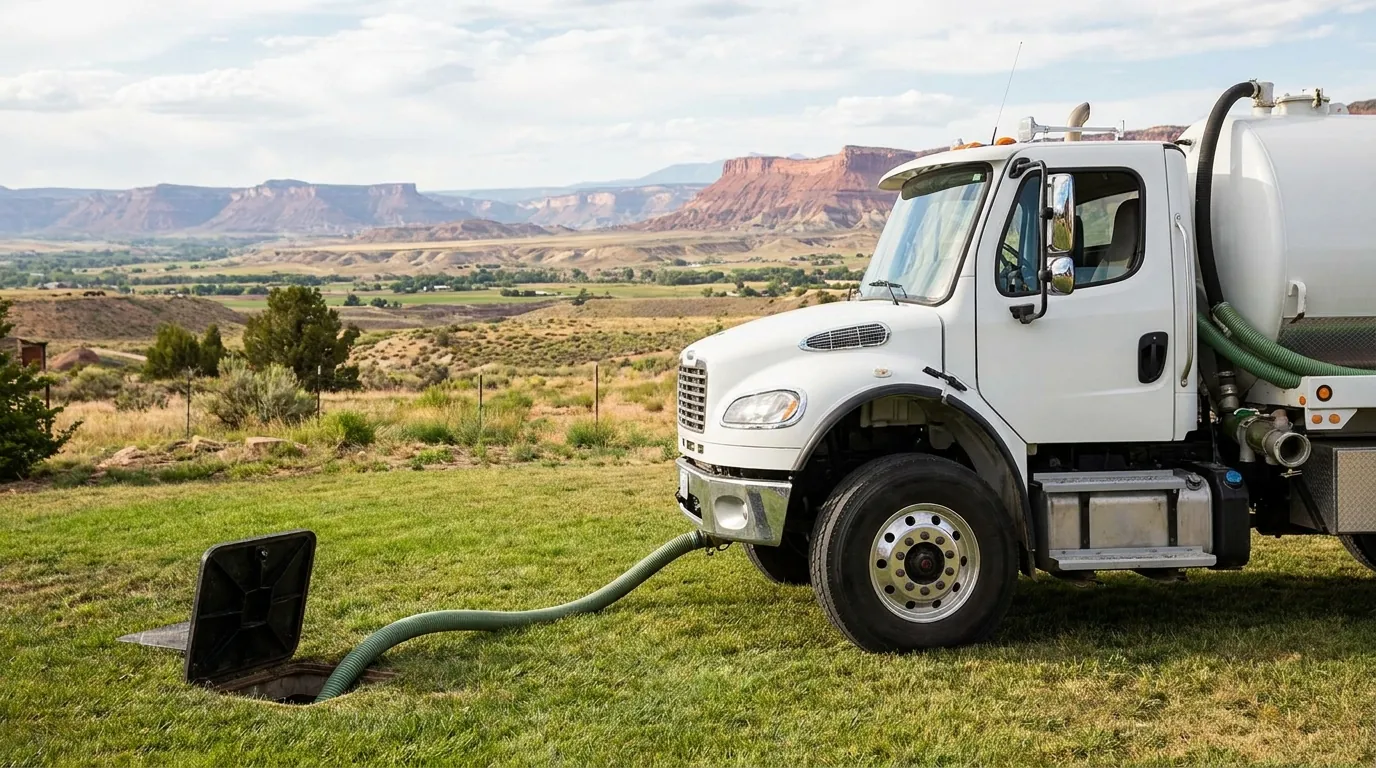
Orchard Mesa sits on the bench of ground rising south of the Colorado River, just across from downtown Grand Junction. Many properties here sit on larger lots that were platted before public sewer reached the area, which is exactly why septic systems are still common along the mesa and its orchard-country side streets. If you own one of these homes, the tank in your yard is doing quiet work every day, and it needs periodic pumping to keep solids from reaching the drain field.
The mesa's ground is a mix of river-terrace gravels and finer clay-heavy soils, and that mix changes from block to block. Where soil drains fast, effluent moves through the drain field quickly; where clay dominates, water lingers and the system works harder. Because we can't see your soil from the street, the honest first step is usually a look in the tank to measure the sludge and scum layers rather than guessing at a schedule.
Orchard Mesa's housing runs from mid-century ranch homes to newer builds on subdivided orchard parcels. Older tanks here are often concrete, sometimes single-compartment, and their access lids can be buried under years of settled soil and landscaping. Part of a good pumping visit on the mesa is locating and, where needed, exposing that lid so the tank can be pumped fully rather than skimmed through a narrow inspection port.
Sloped lots are common on the mesa, and slope matters for septic. A drain field placed downhill of the tank can collect surface runoff during spring melt, saturating the soil right when the system is already loaded. If your yard holds water above the drain field or you smell odor after a wet stretch, that's worth a look. Our drain field service and routine septic tank pumping both start with understanding how water moves across your specific lot.
For homes being sold or refinanced, a documented septic system inspection gives you and the buyer a clear picture of tank condition and drain field function before closing.
Schedule Orchard Mesa septic service
Tell us your cross streets on the mesa and roughly when your tank was last pumped, and we'll help you plan the next visit.
Serving Orchard Mesa and the surrounding Grand Junction area.
Frequently asked questions
How do I find my septic tank if the lid is buried?
On older Orchard Mesa lots the lid often sits under settled soil or landscaping added over the years. We can trace the line from the house and probe to locate the tank, then expose the lid so the tank can be pumped through its full opening rather than a small port.
Does the mesa's slope affect my septic system?
It can. A drain field placed downhill of the tank may collect spring runoff and stay saturated longer, which reduces how well it accepts effluent. If you notice standing water or odor after a wet stretch, that's a sign the drain field is being loaded from above.
How often should an Orchard Mesa home pump its tank?
It depends on tank size, household size, and local soil, so most homes fall in a three-to-five-year range. Measuring the sludge and scum layers on a first visit gives a far more accurate schedule than a rule of thumb.