Septic Tank Cleaning in Grand Junction
Septic tank cleaning in Grand Junction goes beyond a basic pump-out. Learn how cleaning a septic tank removes caked sludge and restores capacity.
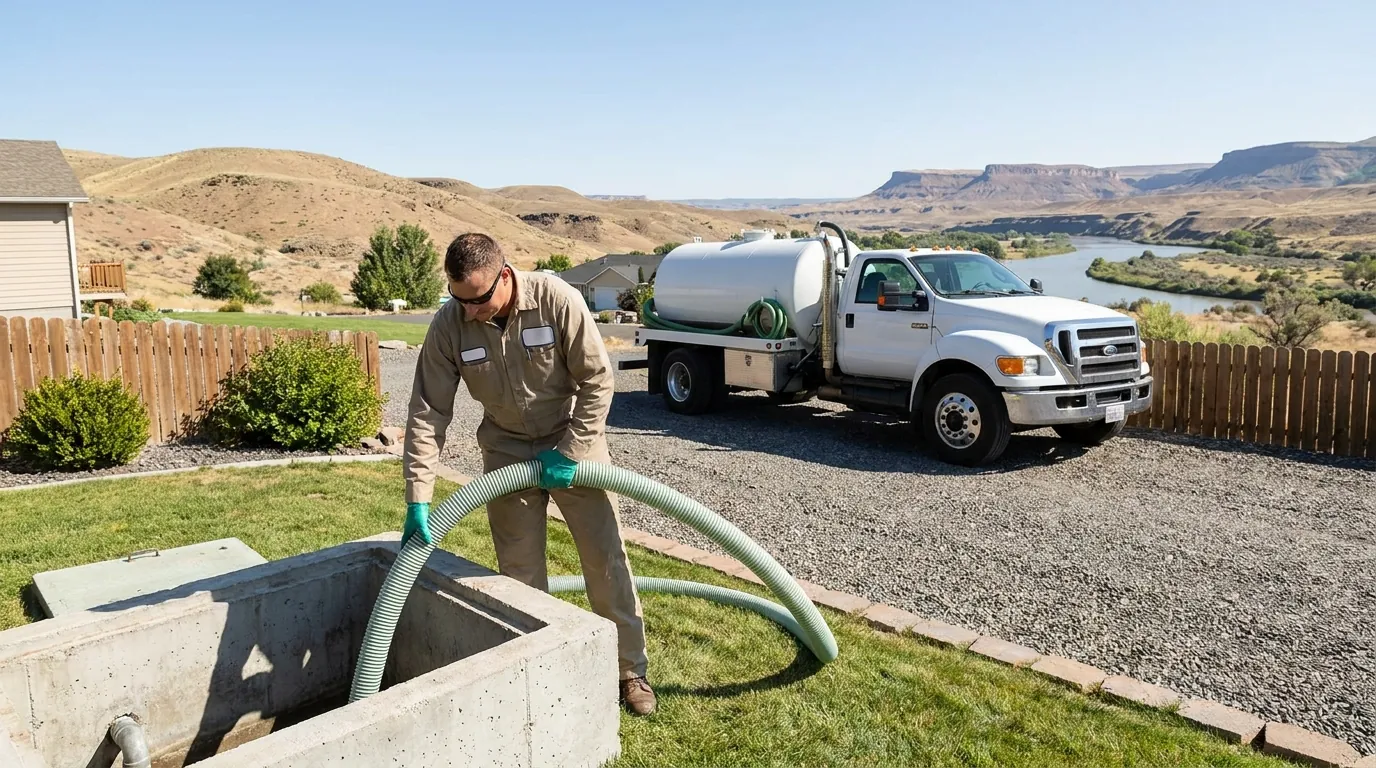
Cleaning vs. pumping
People use the words interchangeably, but there is a real difference. Pumping removes the liquid and the loose solids floating and settled in the tank. Cleaning the septic tank goes further: it breaks up and removes the hardened sludge that has compacted on the floor and the grease crusted along the walls, restoring the tank to close to its original working volume.
Why does it matter? A tank half full of caked sludge cannot separate solids from liquid properly, so more solids ride out to the drain field with every flush. Over years, a tank that is only ever skimmed loses working capacity even though it looks empty right after a visit. Cleaning a septic tank recovers that lost space.
How cleaning a septic tank works
Cleaning combines pumping with agitation and rinsing to lift compacted material.
-
Pump the liquid layer
We remove the liquid and floating scum first so the truck can work on the heavier material underneath.
-
Break up compacted sludge
Using water and back-flushing, we loosen sludge that has hardened on the tank floor. Cold Grand Valley winters slow decomposition, so this bottom layer often builds thicker than owners expect.
-
Remove and rinse
We vacuum out the loosened material and rinse the walls, baffles, and floor so the tank starts fresh rather than partly full.
-
Inspect the clean tank
With the tank empty and clean, we can see the true condition of the baffles and structure and flag anything that needs repair.
Local factors and when to clean
Dry air and hard water are facts of life in Grand Junction, and hard-water scale plus grease can build a stubborn crust inside a tank. Homes that go long stretches between visits, or that put a lot of fats and food waste down the drain, tend to need full cleaning rather than a routine pump-out. If a recent septic system inspection found thick, caked sludge, cleaning is the fix.
For most households, regular septic tank pumping on a sensible schedule keeps a tank from ever needing deep cleaning. Cleaning is what you turn to when maintenance has slipped or when a system has been neglected long enough that solids have hardened in place.
Restore your tank's capacity
If your tank has gone years without service, cleaning recovers the working volume a quick pump-out cannot.
Available throughout Grand Junction and nearby towns.
Frequently asked questions
How is cleaning different from pumping?
Pumping empties the liquid and loose solids; cleaning also removes the hardened sludge and grease crust that a pump-out leaves behind. Cleaning restores more of the tank's original capacity.
How do I know if my tank needs cleaning rather than pumping?
If it has been many years since service, or an inspection shows thick sludge caked to the floor, cleaning is the better choice. A technician can measure the sludge layer and tell you which the tank needs.
Does cleaning damage the bacteria in my tank?
The helpful bacteria live in the wastewater and re-establish quickly after service. You do not need to add commercial additives afterward; normal household use restores the biology on its own.
How often is a full cleaning needed?
Most well-maintained tanks never need a deep cleaning if they are pumped on schedule. Cleaning is typically a corrective step for neglected or heavily used systems rather than a routine one.