Septic Emergency Service in Grand Junction
Septic emergency service in Grand Junction for backups, overflows, and sewage odors. Learn what to do first and how fast to act.
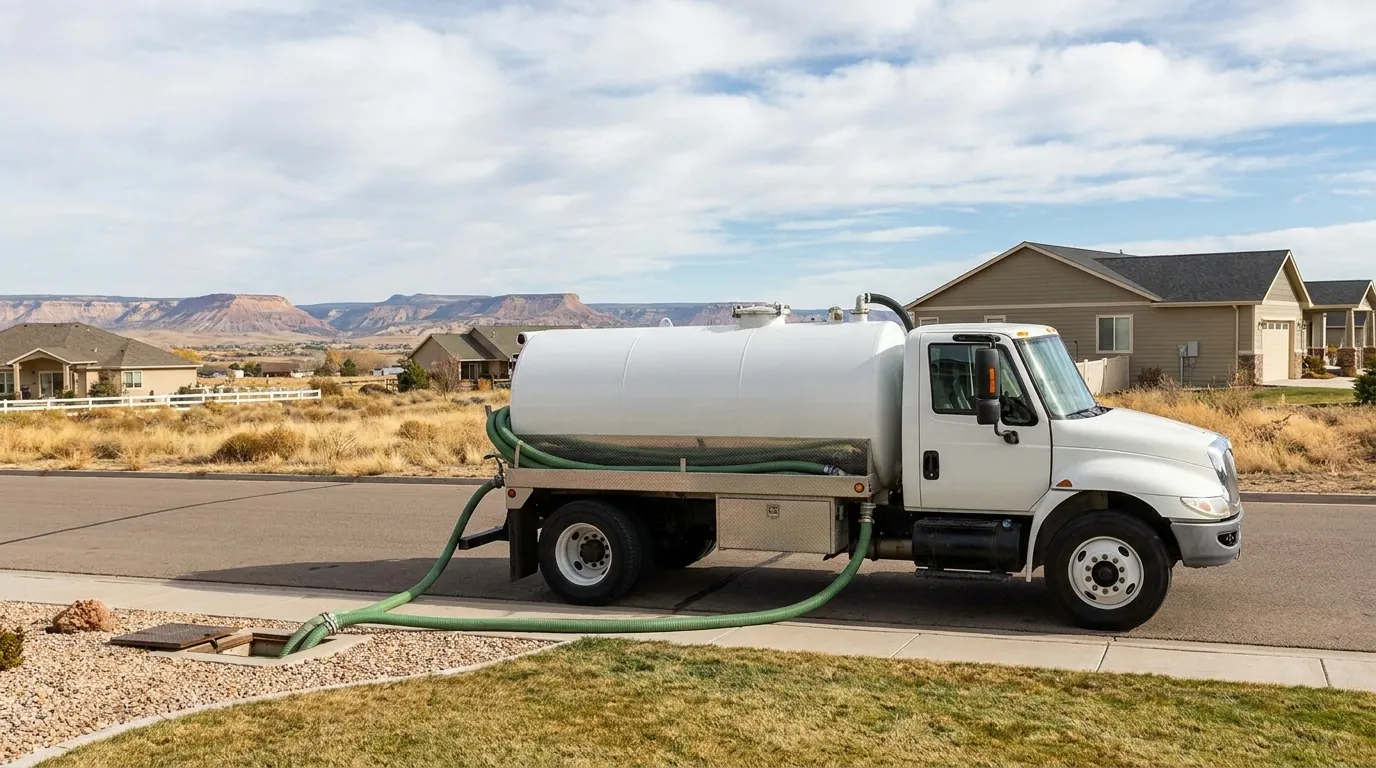
When it is an emergency
Some septic problems can wait for a scheduled visit. Others cannot. Sewage backing up into tubs and floor drains, wastewater surfacing in the yard, multiple drains failing at once, or a strong sewage smell inside the house all signal that the system has stopped moving waste and needs immediate attention. Left alone, these turn into flooded floors, damaged flooring, and a health hazard.
The first step when you see a backup is to stop adding water. Hold off on flushing, laundry, and dishes, because every gallon you send down makes the overflow worse. Keep people and pets away from any surfaced sewage, and get help on the way.
How an emergency call works
The goal is to stop the immediate problem, then find the cause.
-
Stop the overflow
The first priority is relieving pressure on the system, usually by pumping the tank so waste has somewhere to go and the backup stops rising.
-
Find the cause
With the immediate crisis handled, we determine whether the tank was simply overdue, a baffle failed, or the drain field is saturated, so the right fix follows.
-
Clear the path
We check for blockages between the house and tank and confirm waste is flowing again before we leave.
-
Plan to prevent a repeat
Emergencies rarely come out of nowhere. We lay out the maintenance or repair that keeps the same failure from happening again.
What raises emergency risk here
Grand Junction's freeze-thaw swings and clay soils both raise the odds of a sudden failure. Cold snaps slow the tank's biology and can freeze shallow lines, while spring runoff and wet stretches saturate the slow-draining soil, leaving the drain field with nowhere to send water. A tank that was already overdue tips over the edge fastest under these conditions.
Most emergencies trace back to skipped maintenance. Staying current with septic tank pumping is the best protection, and a septic system inspection after any backup tells you whether the tank, a baffle, or the drain field caused it so the problem does not return.
Dealing with a backup now?
Stop adding water and call. The faster the tank is relieved, the less damage the overflow does.
Serving Grand Junction and the surrounding Grand Valley.
Frequently asked questions
What should I do the moment I see a backup?
Stop using water immediately, including toilets, sinks, laundry, and dishwashers, since every gallon makes the overflow worse. Keep people and pets away from any surfaced sewage and get help on the way.
Will pumping the tank fix an emergency backup?
Pumping usually stops the immediate overflow by giving waste somewhere to go. Whether it is a lasting fix depends on the cause, since a saturated drain field or failed baffle may need more work after the crisis is handled.
How do I know if a smell is an emergency?
A strong, persistent sewage smell inside the house, especially with slow drains, suggests waste is not leaving the system and warrants prompt attention. An occasional faint outdoor odor is less urgent but still worth having checked.
Can freezing weather cause a septic emergency?
Yes. Cold snaps can freeze shallow pipes and slow the bacteria that keep a tank working, and a system already near capacity is the most likely to fail in a hard freeze. Keeping the tank from getting overdue reduces that risk.