Septic Tank Pumping in Grand Junction
Septic tank pumping service for Grand Junction and the Grand Valley. Learn the warning signs, the process, and how local soils affect pumping.
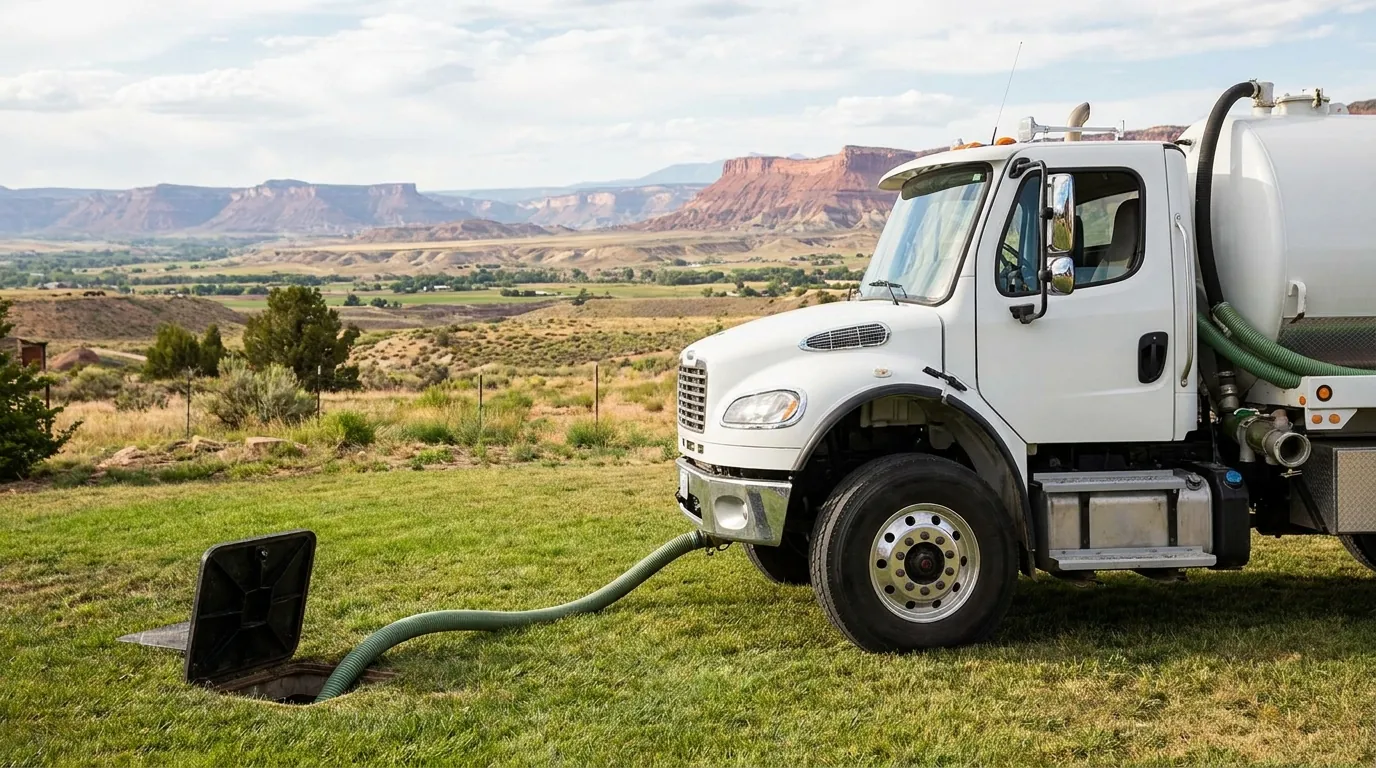
Why regular pumping matters here
Every septic tank collects solids that settle to the bottom as sludge and grease that floats to the top as scum. Pumping removes both before they build high enough to reach the outlet and wash into your drain field. Once solids escape the tank, they clog the soil that filters your wastewater, and that repair costs far more than routine pumping ever would.
In Grand Junction and across the Grand Valley, dry air and a wide freeze-thaw swing shape how a system behaves through the year. Low winter temperatures slow the bacteria that break down waste inside the tank, so solids accumulate faster in the cold months than many homeowners expect. A tank that seemed fine in September can be overdue by spring.
A septic tank pumping service is the foundation of everything else your system needs. If it has been more than a few years since your last visit, or you have never had the tank opened, pumping is the right first step and often reveals problems a homeowner would never see from the surface.
What a pumping visit involves
A thorough septic tank pumping is more than emptying a tank. Here is what the work covers.
-
Locate and open the tank
We find the tank and access the lids or risers. On older Grand Valley properties the lids are often buried under a foot or more of soil, so locating them accurately saves digging and protects your yard.
-
Measure sludge and scum
Before pumping we check how deep the sludge and scum layers have grown. This tells us how overdue the tank was and helps set a realistic interval for your next visit.
-
Pump both compartments
Most tanks have two compartments. We pump both fully rather than skimming the liquid, because leaving compacted sludge behind defeats the purpose of the service.
-
Inspect while the tank is empty
An empty tank is the only chance to check the baffles, inlet and outlet tees, and walls for cracks. We note anything that needs attention so you can plan ahead.
-
Backfill and record
We close the access, restore the soil, and record the date and condition so your next service is based on real data, not a guess.
Local conditions and next steps
The expansive clay soils common along this stretch of the Front Range and western Colorado drain slowly and shift with moisture. Slow-draining soil means the tank does more of the work of separating solids, and it makes a healthy tank even more important. If your drain field already struggles, overdue pumping accelerates the damage.
If you are not sure when your tank was last pumped, start with a septic system inspection so you know the baseline. When a visit turns up sludge caked to the floor or heavy grease, septic tank cleaning goes further than a standard pump-out. And if you are seeing backups or standing water right now, treat it as a septic emergency service call rather than waiting for a scheduled visit.
Ready to schedule pumping?
Get your Grand Junction septic tank pumped on a schedule that matches how your household actually uses it.
Call to arrange a visit anywhere in the Grand Valley.
Frequently asked questions
How often should I pump my septic tank?
Most households in this area do well on a three-to-five-year interval, but it depends on tank size and how many people live in the home. Cold winters slow the tank's bacteria, so heavy users often land at the shorter end of that range.
What does septic tank pumping cost?
Cost depends on tank size, how accessible the lids are, and how overdue the tank is. Buried or hard-to-locate lids add labor, which is why a system with risers is usually cheaper to service.
Can I pump the tank myself?
No. Septic waste requires a vacuum truck and proper disposal at an approved facility. Opening a tank is also dangerous because of the gases inside, so this is not a DIY task.
Does pumping fix a backed-up drain?
Sometimes. If solids have overflowed into the outlet, pumping the tank can restore flow. If the drain field itself is saturated or clogged, pumping helps but the field may need separate attention.