Grease Trap Pumping in Grand Junction
Grease trap pumping for Grand Junction restaurants and kitchens. Keep grease out of your lines and stay ahead of backups with regular service.
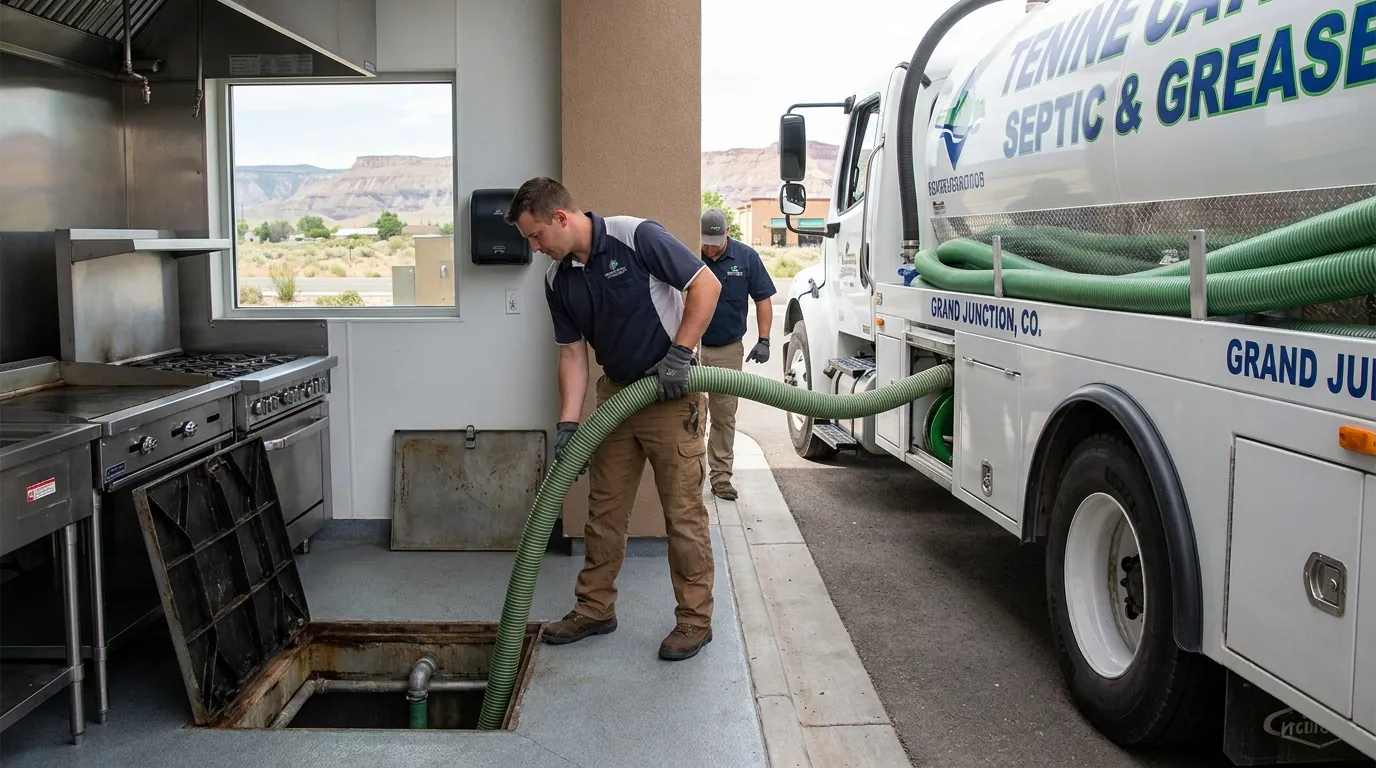
Why grease traps need routine pumping
A grease trap captures fats, oils, and grease before they reach your septic system or the municipal sewer. As wastewater cools inside the trap, grease floats to the top and food solids sink to the bottom, leaving cleaner water to pass through. When the trap fills, that separation stops working and grease pushes downstream, where it hardens and clogs lines.
For restaurants, cafes, and any commercial kitchen in Grand Junction, a neglected trap shows up as slow drains, foul odors near the kitchen, and eventually a backup during the worst possible dinner rush. Regular grease trap pumping prevents that and keeps the trap doing its job.
What grease trap service involves
A proper service empties and inspects the trap, not just the top layer.
-
Pump the full trap
We remove the floating grease cap, the water, and the settled food solids on the bottom, so the trap starts empty rather than partly loaded.
-
Scrape and inspect
We check the baffles and walls and scrape hardened grease so the trap regains its full capacity and the baffles work as designed.
-
Check flow
We confirm water moves through the trap freely and note whether the pumping interval should be tightened based on how full the trap was.
-
Dispose properly
Collected grease is hauled to an approved disposal site, keeping it out of your lines and out of the environment.
Local considerations
Grand Junction's dry climate and cold winters cause grease to solidify quickly once it leaves a warm kitchen, so grease that escapes an overfull trap hardens fast in the cooler pipe runs. That makes staying ahead of the pumping schedule especially important for kitchens on septic systems, where escaped grease can foul the tank and drain field.
If your kitchen shares its waste stream with a septic system, pairing grease trap service with regular septic tank pumping protects the whole system. And if a trap has already overflowed and lines are backing up, treat it as a septic emergency service situation to limit the disruption.
Keep your kitchen running
Set up grease trap pumping on a schedule that matches your kitchen's volume and stay ahead of backups.
Serving commercial kitchens across the Grand Valley.
Frequently asked questions
How often should a grease trap be pumped?
It depends on the trap size and how much grease your kitchen produces. Busy kitchens often need service monthly or more, while lighter operations can go longer; the fill level at each visit tells us the right interval.
What happens if I skip grease trap service?
Grease pushes past the full trap and hardens in your lines, causing slow drains, odors, and eventually a backup. On a septic system it can also foul the tank and drain field, turning a routine task into a costly repair.
Can I pour grease down the drain instead?
No. Pouring grease down the drain is what grease traps exist to prevent. It cools and hardens in the pipes and is a leading cause of kitchen line clogs and septic problems.
Do you dispose of the grease properly?
Yes. Collected grease and solids are hauled to an approved disposal facility rather than released into the sewer or ground, which is both required practice and the responsible way to handle it.