Septic System Inspection in Grand Junction
Septic system inspection in Grand Junction. Find failing baffles, drain field trouble, and septic system repair needs before they become emergencies.
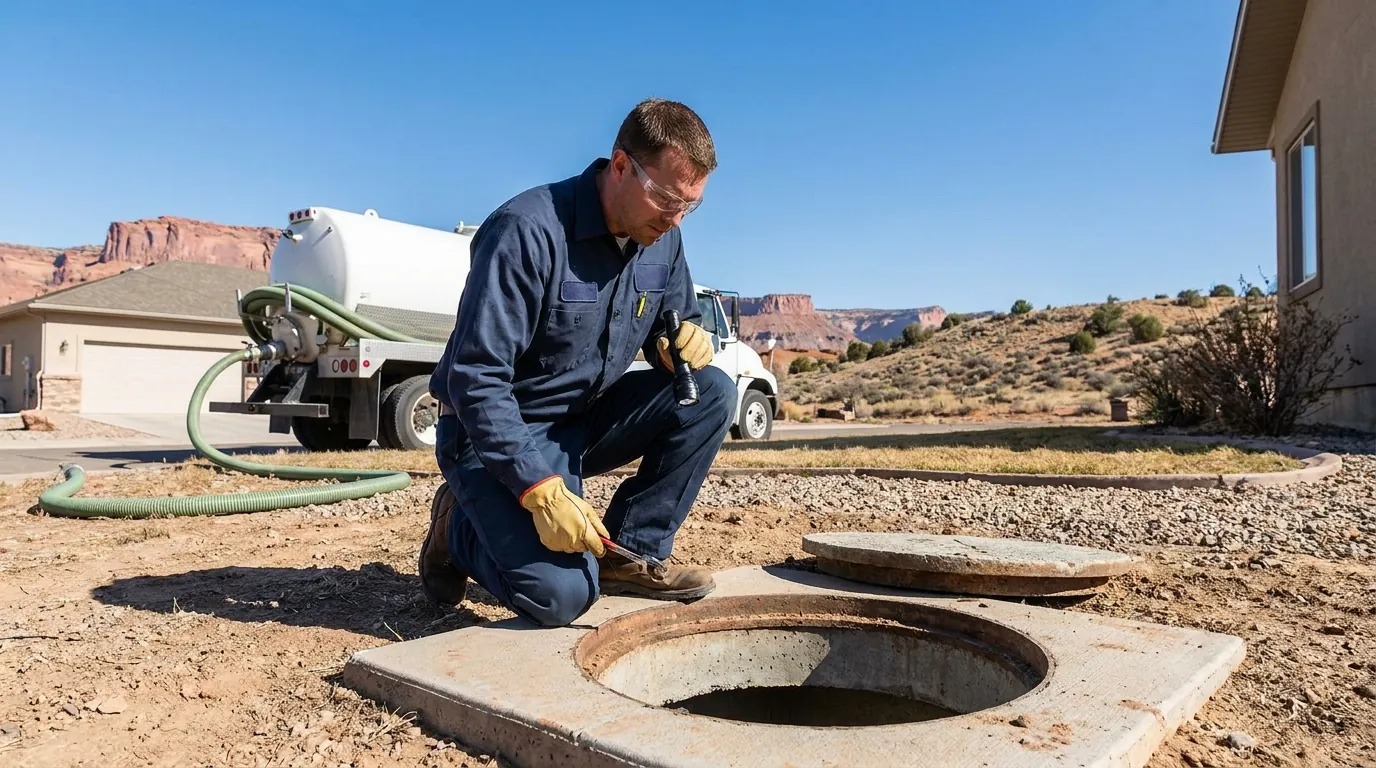
When an inspection is worth it
A septic system inspection tells you what is actually happening below the surface: how full the tank is, whether the baffles and tees are intact, and whether wastewater is leaving the tank and soaking into the drain field the way it should. Homeowners order inspections before a real estate sale, after buying a house with an unknown system, or when small warning signs suggest trouble is coming.
The signs that call for a look are usually subtle at first. Drains that gurgle, a toilet that empties slowly across the whole house, patches of unusually green grass over the drain field, or a faint sewage smell in the yard all point to a system under stress. Catching these early is the difference between a small septic system repair and a full replacement.
What we check
A useful inspection covers the whole system, not just the tank lid.
-
Tank levels and structure
We measure sludge and scum, then examine the tank walls, lids, and risers for cracks or corrosion that let groundwater in or wastewater out.
-
Baffles and tees
The inlet and outlet baffles keep solids in the tank. When they break down, solids escape to the drain field. We confirm both are present and sound.
-
Drain field performance
We look for standing water, odors, and soggy ground over the field, which signal that the soil can no longer absorb the flow it receives.
-
Flow and back-pressure
By observing how the tank handles water, we can tell whether the outlet is flowing freely or backing up, which narrows down whether the problem is the tank or the field.
How local soil changes the findings
The expansive clay soils around Grand Junction, Redlands, and Orchard Mesa drain slowly and swell when wet. A drain field that would perform fine in sandy soil can stay saturated here for days after heavy use or a wet stretch, which shows up during inspection as standing water and slow absorption. The freeze-thaw cycle also cracks aging tanks and shifts pipe joints, so structural findings are common on older systems.
An inspection almost always pairs with septic tank pumping, because an empty tank is the only way to see the baffles and floor clearly. If the field itself is the concern, drain field service is the natural next step once the inspection identifies where the flow is failing.
Get a clear picture of your system
Schedule a septic system inspection before small problems turn into a full replacement.
Serving Grand Junction and the surrounding Grand Valley.
Frequently asked questions
Do I need an inspection to sell my house?
Many buyers and lenders in the Grand Valley ask for a septic inspection before closing. Even when it is not required, a clean inspection reassures buyers and a documented one protects you from disputes later.
Will an inspection tell me if I need a septic system repair?
Yes. An inspection identifies cracked baffles, failing tees, and drain field saturation, which are the most common repairs. It gives you specifics so you can weigh a repair against replacement.
How long does an inspection take?
A standard inspection usually takes an hour or two, longer if the lids must be located and dug out. Pairing it with a pump-out lets us see the tank interior clearly.
Can you inspect a system I just bought?
Absolutely. Inspecting a newly purchased system establishes a baseline so future visits are measured against real data instead of guesswork, which is especially useful when the previous owner kept no records.