Drain Field Service in Grand Junction
Drain field service in Grand Junction. Spot soggy ground and slow drains early, and learn how local clay soils affect your septic leach field.
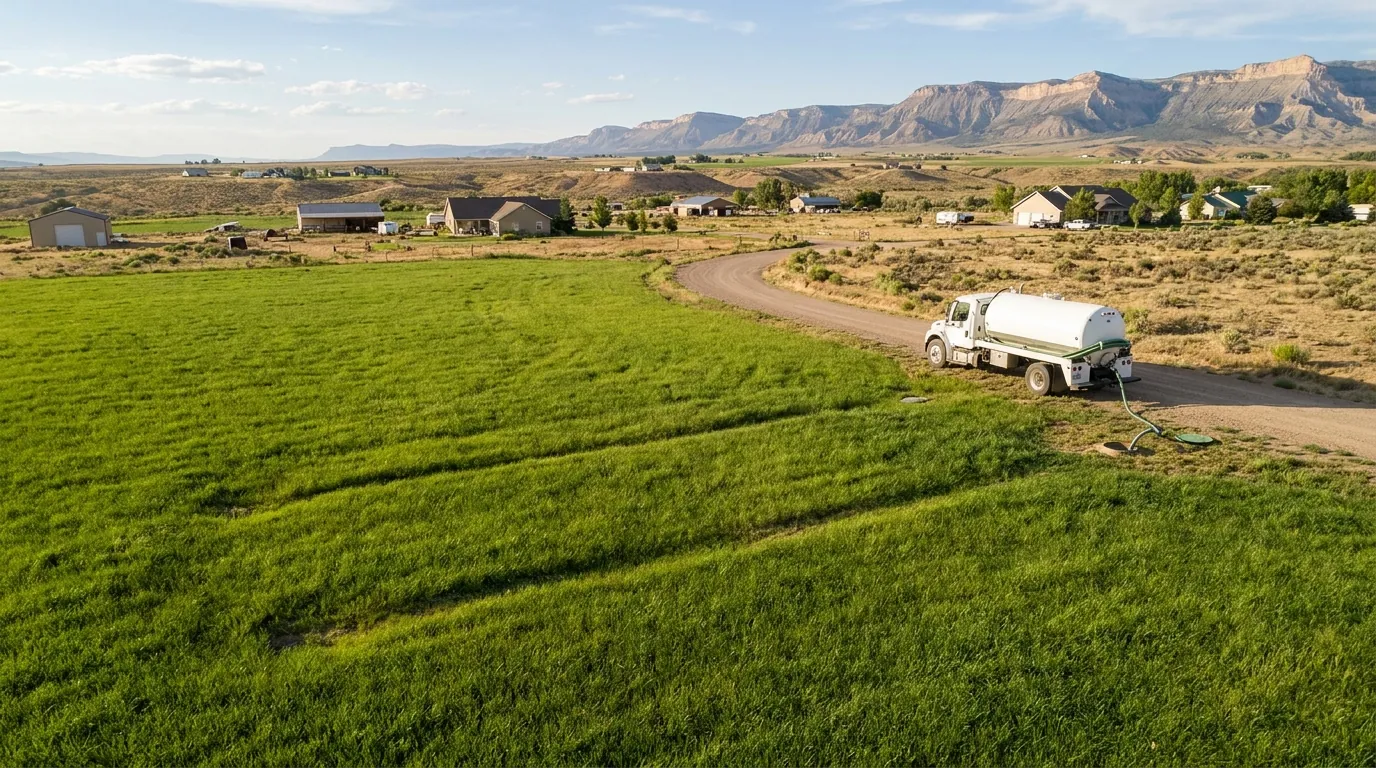
What the drain field does and how it fails
After liquid leaves your tank, it flows into the drain field, a network of perforated pipes in gravel trenches that lets wastewater soak into the soil, where microbes finish treating it. When the field works, you never think about it. When it fails, the symptoms are hard to miss: soggy or spongy ground over the trenches, water pooling on the surface, sewage odors outdoors, and drains that slow throughout the house.
Drain fields fail for two main reasons. The first is solids escaping a neglected tank and clogging the soil pores, which is why regular tank service protects the field. The second is hydraulic overload, where more water reaches the field than the soil can absorb, so it stays saturated and stops accepting flow.
What drain field service covers
Service focuses on finding why the field is struggling and relieving the load.
-
Confirm the tank is not the cause
We start at the tank, because an overfull or clogged tank pushes solids into the field. Restoring the tank first often relieves pressure on the field.
-
Assess field saturation
We evaluate how wet the field is and whether water is surfacing, which tells us whether the soil is overloaded or the pipes are clogged.
-
Reduce the load
We identify sources of excess water, from leaking fixtures to surface runoff draining toward the field, and lay out steps to give the soil time to recover.
-
Plan next steps
Depending on findings, the field may recover with reduced load and time, or it may need more involved work. We give you a clear picture either way.
Why Grand Valley soil makes fields vulnerable
The expansive clay soils common around Grand Junction, Clifton, and Fruita drain slowly and swell when wet. A drain field depends entirely on the soil's ability to absorb water, so slow-draining clay leaves less margin than sandy ground. During a wet stretch or spring runoff, a field that copes most of the year can saturate and back up. The freeze-thaw swing can also heave shallow soils and disturb trench pipes over time.
Because solids from a tired tank are a leading cause of field failure, keeping up with septic tank pumping is the single best way to protect the field. If you are seeing surface water or odors now, a septic system inspection pinpoints whether the tank or the field is the source before you spend money on the wrong fix.
Protect your drain field
Address soggy ground and slow drains early, while the field can still recover.
Serving Grand Junction and the Grand Valley.
Frequently asked questions
Why is the ground over my drain field wet?
Saturated, soggy ground usually means the soil can no longer absorb the flow it receives, either from an overloaded field or from solids clogging the soil pores. It should be assessed promptly before the field fails completely.
Can a failing drain field be saved?
Sometimes. If the tank is the cause and the field is only recently overloaded, reducing the load and servicing the tank can let the soil recover. Long-neglected fields with clogged soil may need more involved work.
Does heavy runoff affect my field?
Yes. Surface water draining toward the field or a high seasonal water table adds to the load the soil must handle. Directing runoff away from the field and spreading out water use both help in our clay soils.
How can I prevent drain field problems?
Pump the tank on schedule so solids never reach the field, fix leaking fixtures, spread out laundry and heavy water use, and keep vehicles and heavy structures off the field area.